Process of Fabricating Mouth Guards
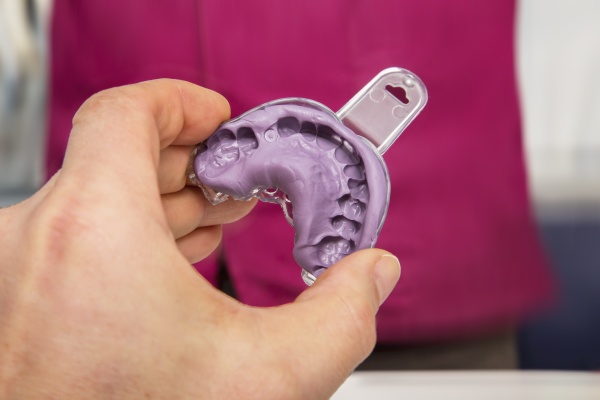
Mouth guards have many names — occlusal guard, night guard, bite guard, mouthpiece, occlusal splint, etc. — and function as a protective appliance to shield the teeth and gums from injury or damages. They are available in different forms, but the best and most effective type are those provided by the dentist.
Custom-made mouth guards are explicitly fabricated to match the patient’s teeth and bite to provide proper fitting and optimal protection. The patient will need to visit the dentist to have the impression of their teeth taken. This process is simple and takes about 15 minutes. The impression will be sent to the dental lab to create the mouth guard, which should be available in about a week. Mouth guards can be used for only the upper or lower set of teeth, or both.
Uses of mouth guards
Dental experts typically recommend mouth guards as a solution to many dental conditions, aside from its use among athletes for protection. The dentist may recommend the device for any of the following conditions:
Bruxism
This is the medical term for teeth grinding or clenching. Teeth grinding option occurs unconsciously during sleep or during the day when the person feels stressed. This condition causes enamel deterioration and without a protective shield, can cause a chipped or cracked tooth. Damaged enamel cannot be repaired and must be replaced with a dental restoration, such as dental crowns or veneers. Fixing the teeth is usually expensive, if not inconvenient.
A mouth guard can reduce the effects of bruxism by serving as a protective barrier between the upper and lower teeth, so they do not hit against each other. It removes the pressure off the jaws and prevents damage. Since teeth grinding while sleeping is inadvertent, the surest and safest way to protect the teeth is by wearing a device that keeps the teeth apart.
TMJ disorder
The temporomandibular joint is the joint that connects the lower jaw to the rest of the skull. Wearing a mouth piece, in this case, helps relieve pressure on the TMJ and alleviate strain. Also, persistently clenching the jaws while sleeping or when upset can cause headaches, soreness in the jaw joints and facial muscles and TMJ disorder, which may result in severe pain in the neck, jaw and face.
Application of medications
Topical medications such as corticosteroids and MI paste for oral conditions are sometimes better applied using a bite guard. The drug is applied to the guard and worn over the teeth to keep the medicine in place over the teeth and gums.
Prevent dental injuries
People who participate in high-impact routines such as sports can prevent injuries to their teeth by wearing mouth guards. The device will be a protective barrier to rebuff any possible force to the teeth.
Aesthetics and protection
Just as mouth guards are used for delivering medications, they can also be used to apply bleaching materials for whitening the teeth.
Final note
If you think you or a loved one might benefit from wearing mouth guards, contact your dentist to have a custom guard created.
Request an appointment here: https://www.esdmke.com or call Eastside Dental at (414) 888-4000 for an appointment in our Milwaukee office.
Check out what others are saying about our services on Yelp: Read our Yelp reviews.
Related Posts
Dental implants can replace missing teeth, but the surrounding tissues still require daily care and professional monitoring. Gum disease around implants (peri-implantitis) can begin with inflammation in the soft tissue and may progress to bone loss if it worsens. Recognizing the signs and seeing a dentist early on can make treatment easier.Routine implant maintenance may…
A dental bridge can replace missing teeth, restore chewing support, and help keep the smile balanced. This restoration uses crowns and artificial teeth to fill a gap and usually attaches to nearby natural teeth or dental implants for support. While timelines can vary, partnering with our dentist can help extend your bridge's lifespan.The lifespan of…
Searching for "dentist near me" offers more than just choosing a provider based on location convenience. The right general dentist provides the essential care necessary to keep a smile healthy and vibrant while protecting the foundation of the teeth and gums. Daily habits like brushing and flossing help maintain oral health, but certain areas remain…
If you rely on implant supported dentures for everyday oral function, a sudden repair may feel like a major setback for your confidence and comfort. While these restorations are designed for long-term durability, their mechanical components can wear down over time. Understanding the restorative process ensures that a solution is reached quickly. Although the titanium posts…